Ugly Christmas Sweater Snowflake Design Review
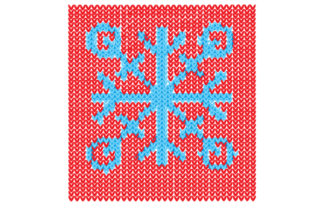
As a professional embroidery designer and product reviewer, I approach every new digital asset with a critical eye. When evaluating the Ugly Christmas Sweater Snowflake for real-world application, my first thought isn't just about how cute it looks on a screen; it is about how those vector lines will translate into physical thread on fabric. This design captures a specific nostalgic mood that is essential for holiday crafts, but its success in a commercial or personal project depends entirely on technical execution. The aesthetic mimics the chunky, textured knit of traditional holiday wear, which presents unique opportunities and challenges for machine embroidery.
Translating Knit Texture to Stitch Data
The visual personality of this Ugly Christmas Sweater Snowflake relies heavily on implied texture. In graphic formats like SVG or EPS, the lines are crisp and flat. However, as an embroidery file, this design demands careful consideration of stitch density and type. If you are converting this from the provided vector formats into a machine embroidery design, you must decide whether to replicate the sweater texture through complex fill stitches or keep it clean with satin stitch outlines.
For a sweatshirt embroidery project, I recommend leaning into the tactile nature of the theme. Using a textured fill stitch can mimic the look of wool yarn, making the snowflake feel like an actual applique design sewn onto the garment. Conversely, if you are working with a smaller hoop size or creating an embroidered patch, simplifying the design to running stitch or satin stitch borders is safer. High stitch density in small areas can cause puckering, especially on stretchy fabrics common in holiday apparel. Always review your digitizing software’s density settings before stitching out this design to ensure the "ugly sweater" vibe remains charming rather than bulletproof.
Real-World Application: Custom Holiday Tote Bags
I recently tested a variation of this concept while preparing a batch of custom tote bags for a local winter market. My goal was to create a handmade product that felt festive but durable enough for grocery shopping. The Ugly Christmas Sweater Snowflake was the centerpiece. Because canvas tote bags have a distinct fabric texture, the design needed enough weight to stand out against the weave.
In this scenario, the transparent PNG file included with your purchase was invaluable for creating printable mockups to show clients before production. Seeing the snowflake superimposed over the natural canvas helped confirm placement and scale. During actual production, I found that this design works best when centered and sized between four to six inches. Any smaller, and the intricate "knit" details get lost in the bag's texture; any larger, and it begins to look disproportionate on a standard 15x16 inch tote. The result was a high-perceived-value item that customers immediately recognized as a premium holiday gift rather than generic merchandise.
Fabric Compatibility and Stabilizer Strategy
Not all textiles treat this design equally. As an experienced maker, I have seen beautiful digital embroidery files fail because they were paired with the wrong substrate. The Ugly Christmas Sweater Snowflake has varying line weights that require stability.
- Stretchy Knits and Sweatshirts: This is the most natural home for this design, but also the riskiest. You must use a cut-away stabilizer to prevent the snowflake from distorting after washing. Test the design on scrap fabric first to check for registration issues between color blocks.
- Woven Cottons and Tea Towels: These are ideal for holiday embroidery projects involving kitchen decor. A tear-away stabilizer usually suffices here. The design’s geometric symmetry looks particularly sharp on smooth woven surfaces.
- Sheer or Lightweight Fabrics: Proceed with caution. If you are attempting baby embroidery or delicate nursery decor, the stitch count required to render the sweater pattern might be too heavy. Consider using only the outline elements or reducing the overall density to maintain drape.
- Caps and Curved Surfaces: While the snowflake shape is generally forgiving, detailed corners can be tricky on curved brims. Ensure your hoop size accommodates the full design without requiring excessive repositioning.
Commercial Viability for Etsy Sellers and Small Shops
For creative entrepreneurs and Etsy sellers, versatility is key. The inclusion of DXF and EPS formats alongside SVG and PNG suggests this asset is intended for multi-use workflows. As a digital product seller myself, I appreciate having source files that allow for resizing without pixelation. This flexibility allows you to adapt the Ugly Christmas Sweater Snowflake across different product lines—from adult custom apparel to pet bandanas—while maintaining brand consistency.
However, a crucial note for commercial embroidery users: always verify licensing terms before selling finished products or digital derivatives. Just because you possess the embroidery file does not automatically grant unlimited commercial rights. Protect your craft business by confirming what is permitted. Assuming compliance, this design has strong buyer engagement potential because it taps into a widely recognized cultural trope. It bridges the gap between ironic humor and genuine holiday warmth, making it suitable for both novelty items and sincere personalized gifts.
Visual Clarity and Thread Color Selection
The impact of this design hinges on contrast. An ugly sweater pattern typically utilizes multiple colors to create its signature chaotic charm. When selecting thread colors, avoid low-contrast combinations unless you are intentionally going for a subtle, tone-on-tone look. For maximum visual appeal and stitching clarity, pair classic holiday reds and greens with cream or white backgrounds.
I strongly advise testing your chosen palette in black and white mockups before committing to thread. This helps identify whether the internal details of the snowflake remain distinct without relying solely on color differentiation. Remember that thread sheen affects perception; matte threads often read more authentically as "sweater" material compared to high-sheen rayon, which can sometimes make the design look too glossy and less like textile art.
Practical Designer Notes for Success
Before you load this design into your machine or list it in your shop, run through this practical checklist derived from years of trial and error:
- Verify File Integrity: Open the SVG and EPS files in your preferred software to ensure all paths are closed and nodes are clean. Corrupt vectors lead to poor digitizing.
- Check Hoop Size Requirements: Do not assume the design fits your standard hoop. Measure the actual dimensions in your software and compare them to your machine’s maximum sewing field.
- Assess Detail Level: Zoom in to 400%. Are there tiny gaps or overlapping lines that will cause needle breaks? Clean these up digitally before stitching.
- Create Physical Samples: Never sell a product based solely on a digital preview. Stitch a sample on the exact fabric you intend to sell. Inspect the back for thread nests and the front for alignment.
- Evaluate Washability: If this is for custom apparel or baby items, wash and dry the test piece. Does the snowflake hold its shape? Does the stabilizer residue disappear?
The Ugly Christmas Sweater Snowflake is more than just a seasonal graphic; it is a test of your technical proficiency and creative judgment. Whether you are crafting a one-of-a-kind holiday gift or scaling production for a boutique collection, treating this design with professional respect will elevate your final output. By understanding the interplay between vector art, stitch physics, and fabric behavior, you transform a simple digital download into a tangible, high-quality asset that resonates with customers and stands the test of time.