Christmas Hats: Ugly Sweater Style Review
As a professional embroidery designer and product reviewer, I approach every new digital asset with a critical eye toward production reality. When evaluating Christmas Hats. Ugly Sweater Style, my primary concern is not just the festive aesthetic, but how this machine embroidery design translates from screen to fabric. The "ugly sweater" motif has become a staple in holiday crafts, yet many designs fail when stitched out due to poor digitizing or excessive density. After reviewing the provided assets—which include SVG, Transparent PNG, EPS, and DXF formats—I see significant potential for both personal projects and commercial embroidery ventures, provided the maker understands the specific technical requirements of this textured style.
First Impressions and Visual Personality
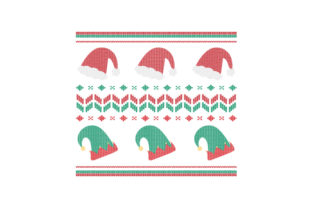
The immediate appeal of Christmas Hats. Ugly Sweater Style lies in its nostalgic, tactile mimicry. A successful ugly sweater design must visually replicate the chunky, interlocking nature of knitwear without actually creating a stitch count so high that it punches holes in your fabric. This design captures that cozy, whimsical mood effectively. The layout suggests a balanced composition that feels intentional rather than cluttered, which is crucial for maintaining clarity when scaled for different hoop sizes.
For an Etsy seller or small shop owner, this visual personality is a major asset. It communicates "handmade" and "festive" instantly. However, as a reviewer, I note that the intricate patterns typical of this genre require careful thread color selection. The design relies on contrast to define the faux-knit texture. If you choose low-contrast thread colors, the beautiful detailing will disappear into a muddy mess on the finished product. The transparent PNG included in the package is particularly useful here; I recommend using it to create printable mockups to test color combinations digitally before committing to physical stitching.
Real-World Application: The Custom Sweatshirt Test
To truly evaluate this embroidery file, I mentally placed it in a real-life production scenario: creating a custom embroidered sweatshirt for a boutique holiday collection. Sweatshirts are the natural habitat for ugly sweater aesthetics, but they present unique challenges. The fleece backing and stretchy knit face demand respect.
In this scenario, Christmas Hats. Ugly Sweater Style serves as an excellent centerpiece for chest placement or yoke embroidery. Because the design mimics textile texture, it integrates beautifully with the garment's existing fabric grain. However, for a commercial embroidery project like this, I would strongly advise treating this as an applique design or a hybrid fill stitch design rather than a full-density satin stitch piece. If the digitizer has utilized running stitches to simulate knitting, it will drape softly and remain wearable. If it is solid fill stitch, the sweatshirt may become stiff and unappealing.
For craft business owners preparing for holiday markets, this design also shines on tote bag designs and tea towels. These items have tighter weaves than sweatshirts, allowing for crisper detail definition. On a canvas tote, the faux-sweater texture creates a delightful juxtaposition that elevates a simple bag into a premium personalized gift. The key here is ensuring the stabilizer matches the weight of the canvas to prevent puckering around those detailed geometric edges.
Technical Considerations and Fabric Limitations
While Christmas Hats. Ugly Sweater Style is versatile, it requires caution in specific applications. As an experienced designer, I must highlight where this design should be used carefully:
- Stretchy Fabrics: When stitching on jersey or ribbed knits, the tension required for detailed sweater patterns can distort the fabric. Always use a cut-away stabilizer and consider a water-soluble topping to keep the stitches from sinking into the pile.
- Small Hoop Sizes: Intricate sweater patterns often lose definition when scaled down below 4x4 inches. Before attempting baby embroidery or cap logos, verify that the smallest details remain distinct. If the lines merge at smaller sizes, reserve this design for larger adult apparel or home decor.
- Curved Surfaces: Stitching this on caps is risky. The flat, grid-like nature of sweater patterns does not always map well to the curved surface of a hat unless specifically digitized for cap frames. Test on a scrap cap first to ensure registration holds.
- Dark Fabrics: While the design works on dark backgrounds, it may require more trims or underlay to prevent the fabric from showing through lighter thread areas. This increases production time and thread usage, a factor for Etsy sellers calculating profit margins.
Ensuring Professional Results and Customer Trust
The difference between a hobbyist outcome and a professional handmade product often comes down to pre-production testing. For Christmas Hats. Ugly Sweater Style, I cannot overstate the importance of a test stitch-out. Never run this design directly onto a final sellable item without verification. Check the stitch density against your specific fabric texture. A design that looks perfect on a quilter’s cotton might be too dense for a lightweight thermal shirt.
Customer trust is built on consistency. If you are selling digital embroidery files or finished goods, your presentation matters. Use the included EPS and SVG files to create clean, vector-based listings that show the design’s true geometry. Avoid blurry screenshots. When buyers see crisp, professional mockups alongside clear photos of actual stitched samples, their confidence in your brand increases. This transparency reduces returns and builds a loyal customer base who trusts your judgment on design assets.
Designer Notes for Production Success
Before loading this embroidery file into your machine, review these practical checkpoints derived from years of industry experience:
- Verify Licensing: The product description lists file formats but does not explicitly state commercial licensing terms. Before selling finished products or listing this as part of a digital bundle, confirm your rights. Protecting your business starts with respecting intellectual property.
- Thread Color Contrast: Test the design in black and white mode in your software. If the pattern disappears in grayscale, your thread contrast is insufficient. Adjust values to ensure the "knit" texture reads clearly from a distance.
- Stabilizer Selection: Match your stabilizer to the end-use. For washable items like baby clothes or kitchen towels, use soft, durable stabilizers that won't irritate skin or degrade in hot water. For decorative patches, a firm tear-away may suffice.
- Mockup Testing: Utilize the Transparent PNG to overlay the design on various garment colors in Photoshop or Canva. This helps identify which base colors make the Christmas hats pop and which ones clash, saving wasted materials.
- Detail Inspection: Zoom in on the digital file to inspect corner points and jump stitches. Excessive jumps in a complex sweater pattern can lead to thread nests on the backside. Plan your trim paths accordingly to maintain a tidy reverse side, especially for unlined items like scarves or blankets.
Ultimately, Christmas Hats. Ugly Sweater Style represents a valuable addition to any holiday embroidery library. Its strength lies in its ability to evoke warmth and tradition while offering flexibility across multiple product categories. Whether you are crafting a personalized gift for a loved one or stocking your Etsy shop for the seasonal rush, success depends on respecting the technical interplay between the digital design and the physical medium. By approaching this design with professional diligence—testing, stabilizing correctly, and verifying suitability—you transform a simple digital file into a high-quality, market-ready product that celebrates the best of Christmas crafts.