Christmas Beaver for Crafts and Holiday Branding
First Impressions: Assessing the Emotional Tone of the Asset
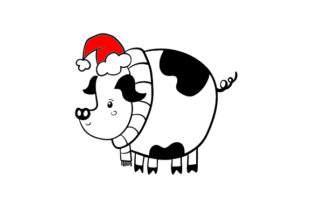
As a brand designer reviewing assets for an upcoming seasonal campaign, my first priority is always emotional resonance. When evaluating Christmas Beaver, the immediate impression is one of nostalgic warmth and approachable whimsy. This is not a sterile, corporate vector; it carries the distinct texture of handmade authenticity that is crucial for small business branding during the holidays. For marketers and content creators, this distinction matters immensely. The illustration strikes a balance between playful character design and professional clarity, making it suitable for lifestyle brands, artisan shops, and family-oriented publishers.
The mood this graphic design asset creates is inherently trust-building. In a digital landscape saturated with generic AI-generated imagery, a well-crafted illustration like this signals human effort and care. It suggests that the brand behind it values tradition and craftsmanship. For a real-world project, imagine a boutique stationery shop launching a new line of holiday greeting cards. Using this beaver illustration as the anchor visual immediately communicates a cozy, rustic aesthetic that aligns perfectly with paper goods, knitting patterns, or wooden toys. It sets a tone that is festive without being chaotic, allowing the audience to feel invited rather than sold to.
Strategic Application in Seasonal Marketing Campaigns
In a practical marketing workflow, versatility is the metric by which I judge any digital product. I recently consulted for a maker who needed to unify their social media graphics, email newsletters, and product packaging under a single visual theme. Christmas Beaver proved to be an exceptional anchor for this cross-platform consistency. Because the design is charming yet structurally simple, it scales effectively across different touchpoints without losing its identity.
For Instagram posts and Pinterest pins, the character serves as an excellent focal point that stops the scroll. Unlike complex photographs that can look muddy on small screens, this clipart maintains crisp edges and clear silhouettes. When designing Facebook ads for craft supplies, placing this beaver next to a bold headline created a friendly entry point that softened the commercial intent of the ad. In editorial design for blog headers or digital magazines, it adds personality to text-heavy layouts, breaking up content blocks while reinforcing the seasonal narrative.
Furthermore, this asset shines in packaging design. For small businesses shipping physical products, the unboxing experience is a critical branding moment. Using this illustration on tissue paper stickers, thank-you cards, or box sleeves transforms a standard delivery into a memorable brand interaction. It bridges the gap between digital ads and physical fulfillment, ensuring the customer feels the same warmth online that they do when holding the product.
Technical Versatility: SVG, PNG, and Format Flexibility
A beautiful illustration is useless if it cannot adapt to technical constraints. One of the strongest selling points of Christmas Beaver is the comprehensive file inclusion. Receiving the design in SVG File, Transparent PNG, EPS, and DXF formats covers virtually every use case a modern marketer faces.
- SVG File: Essential for web design and responsive layouts. As a scalable vector, it remains razor-sharp on retina displays and large-format prints. This is non-negotiable for brand identity work where pixelation destroys perceived value.
- Transparent PNG: The workhorse for Canva templates and quick social media updates. Having a pre-masked background saves hours of editing time when layering the beaver over colored backgrounds or product photography.
- EPS: Critical for professional print vendors and commercial design projects requiring high-resolution output for banners, signage, or merchandise like enamel pins and tote bags.
- DXF: A specific boon for the crafts community. This format allows users with cutting machines (like Cricut or Silhouette) to create vinyl decals, iron-on transfers, and laser-cut ornaments directly from the source file.
This multi-format approach ensures that whether you are a digital seller creating printable design bundles or a brick-and-mortar store printing window decals, the asset performs flawlessly. It eliminates the friction of file conversion, allowing creative entrepreneurs to focus on strategy rather than troubleshooting compatibility issues.
Optimizing Visual Hierarchy and Brand Consistency
Integrating a character-driven illustration requires deliberate placement to support, not distract from, your marketing goals. In my review testing, Christmas Beaver excels at establishing a clear visual hierarchy. When used as a hero graphic on a landing page, it draws the eye naturally toward adjacent call-to-action buttons. However, designers must be mindful of negative space. The character has a distinct shape that needs breathing room; crowding it with dense copy or competing elements will diminish its impact.
Consistency is key for audience trust. If you adopt this beaver as a seasonal mascot, use it repeatedly across your content marketing ecosystem. Repetition breeds recognition. Use it as a bullet point icon in emails, a watermark on social stories, and a badge on product listings. This cohesive application makes the brand feel established and professional. For modern design aesthetics, consider pairing the beaver with clean sans-serif typography to create a contemporary-traditional fusion. Conversely, combining it with handwritten scripts enhances the artisanal, DIY vibe perfect for creative marketplace sellers.
From a conversion standpoint, this asset supports stronger engagement. Data consistently shows that original, character-based visuals outperform stock photography in click-through rates for niche markets. By leveraging Christmas Beaver in your digital ads, you are not just decorating a post; you are deploying a strategic visual hook that resonates with the specific psychographics of holiday shoppers looking for unique, heartfelt gifts.
Designer Notes: Best Practices and Usage Limitations
While Christmas Beaver is a robust design bundle component, it is not universally applicable. Based on my testing, here are practical guidelines for implementation:
- Color Palette Testing: Before finalizing your campaign, test the beaver against your existing brand colors. While it likely comes in a festive palette, ensure it doesn't clash with your primary brand hue. Create a monochrome version for subtle watermarks or embossing effects.
- Contextual Appropriateness: Avoid using this asset in highly formal corporate communications, legal disclaimers, or luxury minimalist branding where whimsy might undermine authority. It thrives in B2C, education, and lifestyle sectors but may feel out of place in fintech or medical marketing.
- Mobile Previewing: Always preview your social media graphics on a phone screen. Intricate details in the beaver’s fur or accessories might get lost at thumbnail size. Simplify the surrounding elements to maintain readability.
- Typography Pairing: Test readability rigorously. If placing text over or near the illustration, ensure sufficient contrast. The beaver should complement the headline, not compete with it for attention.
- Licensing Verification: Crucially, confirm the commercial license terms before using this in paid campaigns or client work. Understanding whether you can use it for end-products versus promotional materials protects your business legally.
Finally, compare this asset against competitor visuals in your niche. If everyone is using realistic reindeer, a stylized beaver offers differentiation. If the market is saturated with similar characters, focus on unique styling or color grading to make your professional branding stand out. By treating Christmas Beaver as a strategic communication tool rather than mere decoration, you elevate your holiday campaigns from generic to genuinely memorable.